
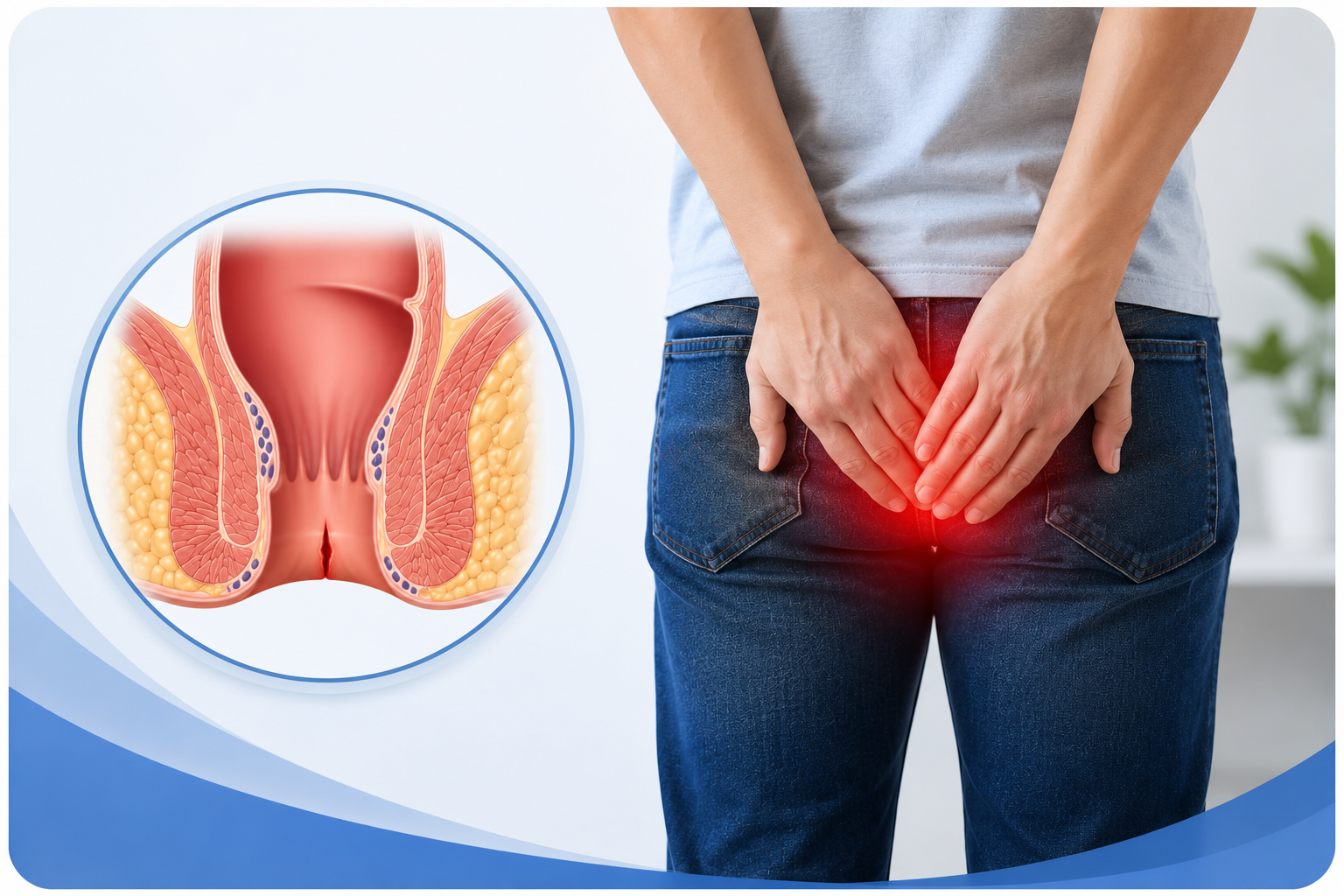
An anal fissure is a small tear in the lining of the anal area. Although it may seem like a minor problem at first, the symptoms can become painful and uncomfortable if they continue. Recognising the signs early can help you seek appropriate medical advice and fissure treatment in Narnaul when needed.
1. Sharp Pain During or After Bowel Movements
One of the most common symptoms of an anal fissure is sharp or burning pain during bowel movements. The pain may continue even after using the toilet and can last from a few minutes to several hours.
You may experience:
- Sharp pain while passing stool
- Burning or stinging after a bowel movement
- Discomfort that makes sitting difficult
Persistent pain should not be ignored, especially if it occurs regularly.
2. Bright Red Blood
A small amount of bright red blood may sometimes be noticed on toilet paper or on the surface of the stool. While bleeding can occur for different reasons, repeated bleeding should be evaluated by a qualified healthcare professional.
Do not assume that all rectal bleeding is caused by an anal fissure. Proper examination can help identify the underlying cause.
3. Burning, Itching, or Irritation
An anal fissure may also cause ongoing irritation around the anal area. Some people experience:
- Burning sensations
- Itching or irritation
- Tenderness around the affected area
- Increased discomfort after bowel movements
These symptoms may interfere with daily activities and cause ongoing discomfort.
4. Visible Tear or Skin Changes
In some cases, a small crack or tear near the anal opening may be visible. Long-lasting or recurring fissures may also lead to changes in the surrounding skin. However, it is best to avoid self-diagnosis, as other conditions can cause similar symptoms.
5. Difficulty or Fear of Passing Stool
Because bowel movements can be painful, some people may start delaying or avoiding them. This can create a cycle where stool becomes harder and more difficult to pass, potentially increasing discomfort.
Pay attention if you notice:
- Fear of going to the toilet because of pain
- Constipation or hard stools
- Repeated pain with bowel movements
To Wrap Up
Persistent pain, bleeding, burning, or difficulty passing stool should not be ignored. Early evaluation can help identify the cause and determine the appropriate care.